Background:
In this lab, we explored the concept of diversity. Diversity plays a major role in a community due to the fact that the more diverse the community is, the more likely a community is able to withstand or recover from small disturbances. One part of measuring a community’s diversity is species richness. Species richness is the number of species present in an area. Species are declining in certain areas due to habitat fragmentation. Habitat fragmentation is the process of larger habitats being divide up and the different parts being isolated from each other. This process affects the species richness of the area. This can be seen in city parks.
The Lab:
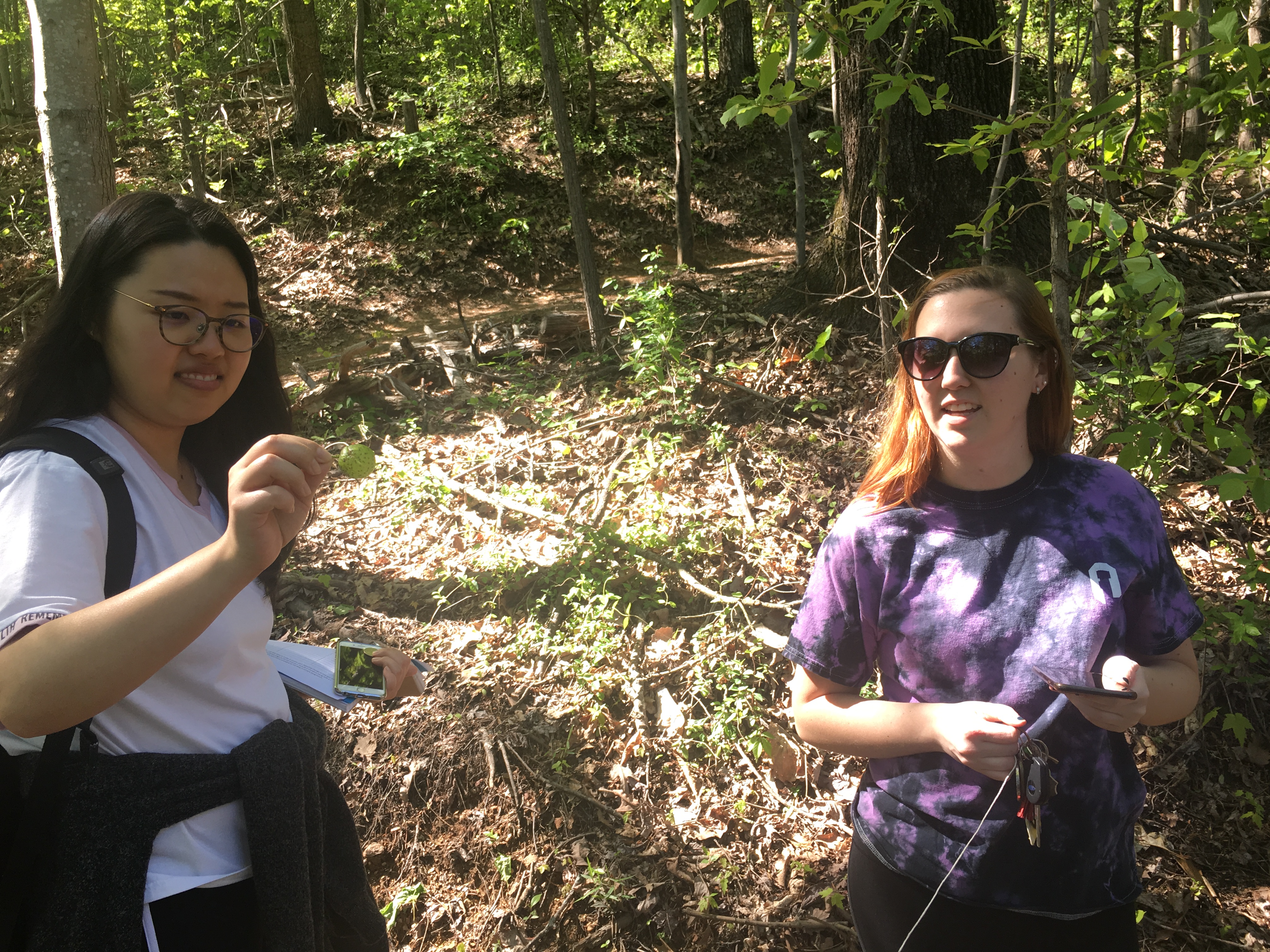
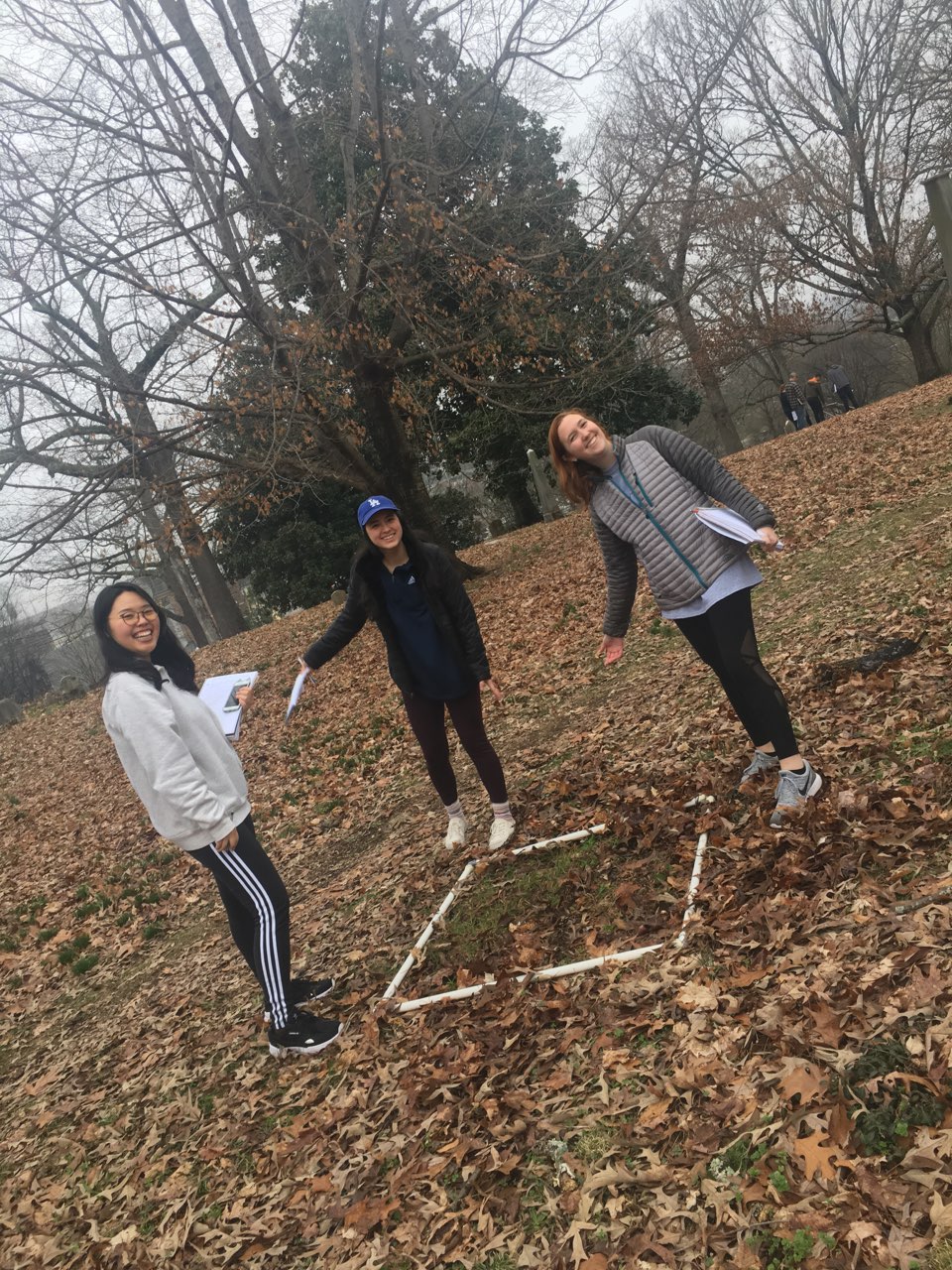
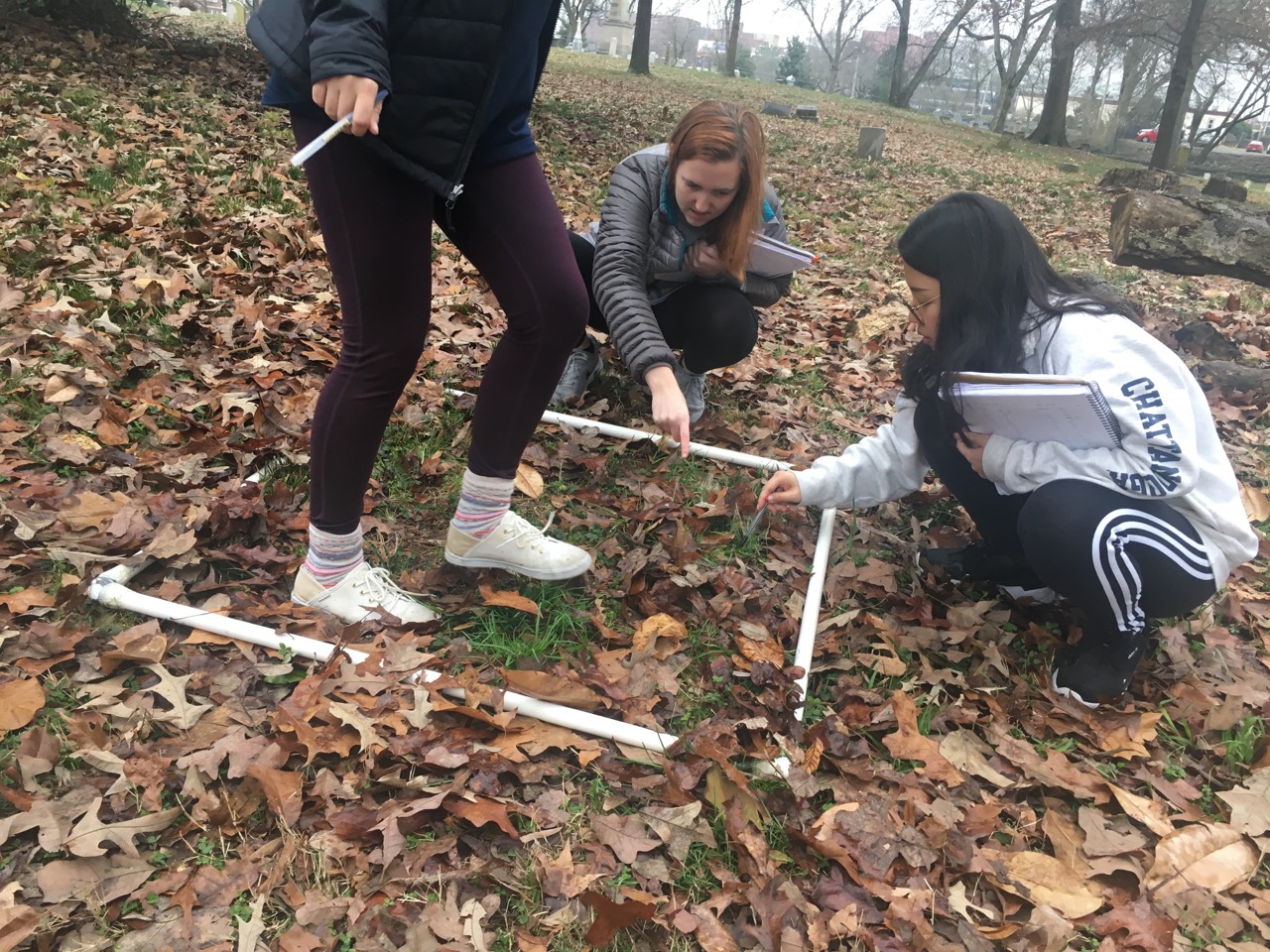
I worked in a group with Morgan and Jisu To study this phenomenon, we sampled data from Stringer’s Ridge by using a line transect. A line transect starts with a line drawn across a certain area. Whatever touches the line is counted in the sample data. The purpose of the lab was to determine whether or not the species richness increases as we enter farther in the forest. This help determines the degree of human impact on the species richness at the edge of the forest.
Environment:
The experimenter was conducted on April 15th. The temperature during the experiment was in the upper fifty to low sixties in Fahrenheit. The forecast was sunny on Monday. However, Chattanooga had experienced heavy amounts of rain in the previous days leading up to the experiment. The only disturbance in our specific area of the trail parts of the trail that had been widening by pedestrians trying to avoid debris in the middle of the trail. As far as soil condition, it was moist due to the rain. Concerning tree sizes from our samples, we had a mix of aged trees included dead and saplings.
Our Data:
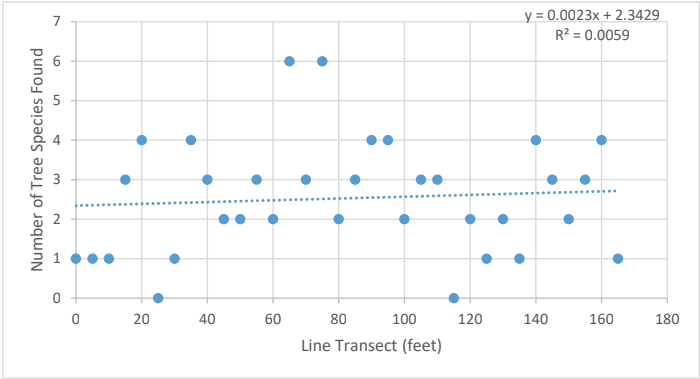
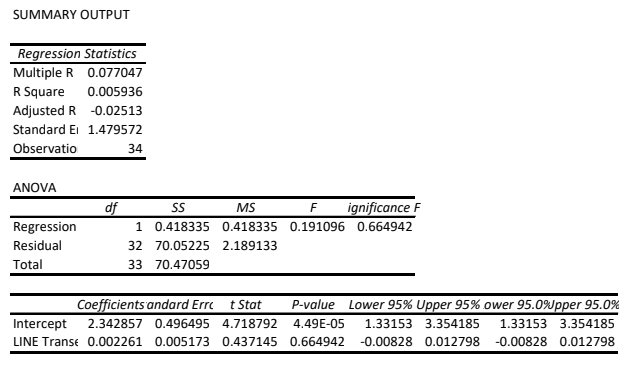
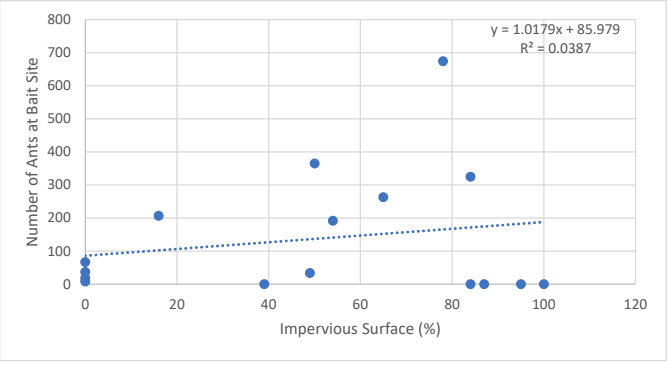
Based on our results, there is no correlation between the distance into the forest and the number of tree species found. This is illustrated in the R^2 value being so small and the trend line almost being a horizontal line. This could be due to the fact that we went to far into the forest to collect our data or that we didn’t go far enough. It is also possible that our sample was not large enough to see a trend.
Gene Flow Halted by Fragmented Forests:
In the article, Gene Flow Halted by Fragmented Forests, the author explains that preserving the ecosystems of river floodplains are important due to the fact these floodplains help fight against poor water quality and erosion but also maintain a highly diverse wildlife range.Scientists at the University of Tsukuba studied the species Acer miyabei. By evaluating the gene flow of this species, scientists are able to see that the younger samples have a greater species differentiation by genetic isolation, because of forest fragmentation. Forest fragmentation has an effect on the species reproduction by insect pollination. This is important to understand and study because it allows scientist to study the effects of forest fragmentation which is one of the factors of urbanization. In conclusion, scientists found that Acer miyabei are important factors in species diversity and there is a need to conserve their habitats.
Restoration:
By understand where species like Acer miyabei are lacking due to environmental changes, scientist and researcher can begin to understand how to aid in the restoration. For example, the article touched on how flies produce in the lead litter of the tree help to pollinate the trees. Scientists are then able to ask the question of what would happen with the increase of file reproduction.
Peer Review Article:
In the article, Tree species richness and the logging of natural forests: a meta-analysis. Jason Covey and Kristofer Covey thoroughly cross analysis studies evolving the impact of logging on tree density. From this analysis, the authors are able to determine common factors in the decline of tree diversity. They explain that in tropical forests, that logging is less of a disturbance than another human evolvement. However, the data shows that nine out of the seventeen tropical forests studies show a negative impact of logging. While in the eight temperate forests there were seven forests that had no significant difference between logging and a natural forest. The other temperate forest found there to be a positive impact from selective logging.
Sources:
Clark, Jason A, and Kristofer R Covey. “Tree Species Richness and the Logging of Natural Forests: A Meta-Analysis.” Forest Ecology and Management, Elsevier, 27 Apr. 2012, http://www.sciencedirect.com/science/article/pii/S0378112712001958.





 biol3070oliver