Tree Diversity:

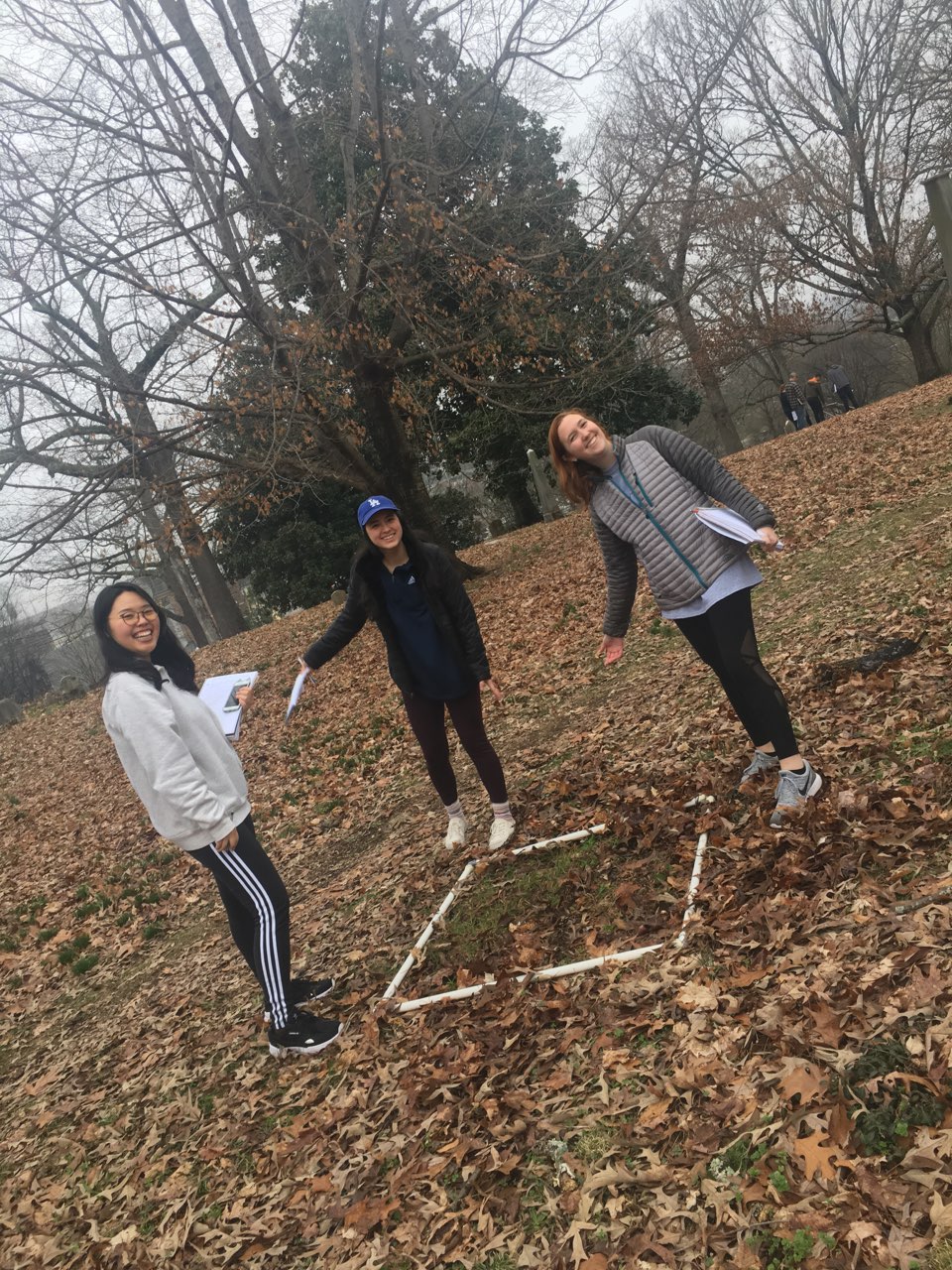
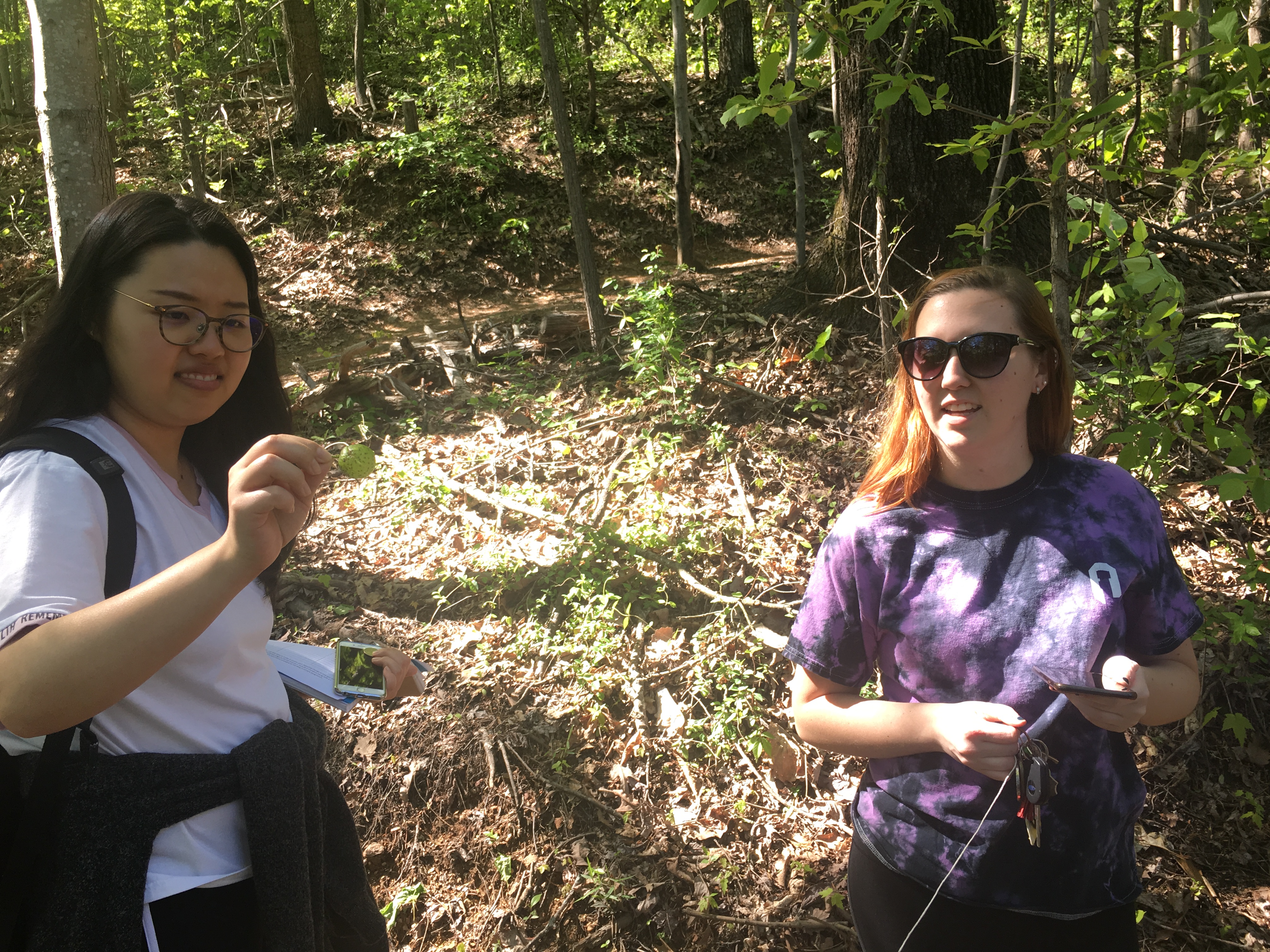
(Jisu and Morgan inspecting a seed pod. This photo is taken by Elisabeth Oliver)

Background:

In this lab, we explored the concept of diversity. Diversity plays a major role in a community due to the fact that the more diverse the community is, the more likely a community is able to withstand or recover from small disturbances. One part of measuring a community’s diversity is species richness. Species richness is the number of species present in an area. Species are declining in certain areas due to habitat fragmentation. Habitat fragmentation is the process of larger habitats being divide up and the different parts being isolated from each other. This process affects the species richness of the area. This can be seen in city parks.

The Lab:

I worked in a group with Morgan and Jisu To study this phenomenon, we sampled data from Stringer’s Ridge by using a line transect. A line transect starts with a line drawn across a certain area. Whatever touches the line is counted in the sample data. The purpose of the lab was to determine whether or not the species richness increases as we enter farther in the forest. This help determines the degree of human impact on the species richness at the edge of the forest.

Environment:

The experimenter was conducted on April 15th. The temperature during the experiment was in the upper fifty to low sixties in Fahrenheit. The forecast was sunny on Monday. However, Chattanooga had experienced heavy amounts of rain in the previous days leading up to the experiment. The only disturbance in our specific area of the trail parts of the trail that had been widening by pedestrians trying to avoid debris in the middle of the trail. As far as soil condition, it was moist due to the rain. Concerning tree sizes from our samples, we had a mix of aged trees included dead and saplings.

Our Data:
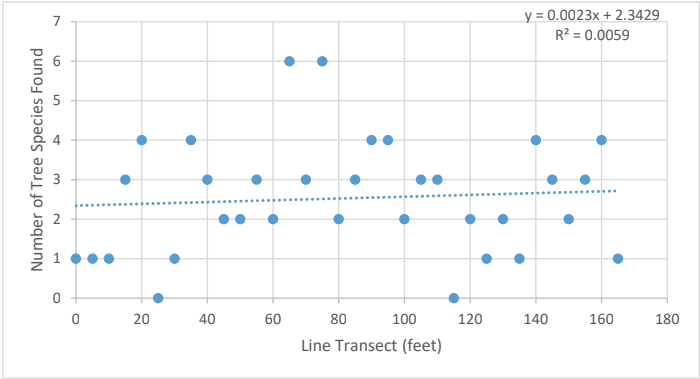
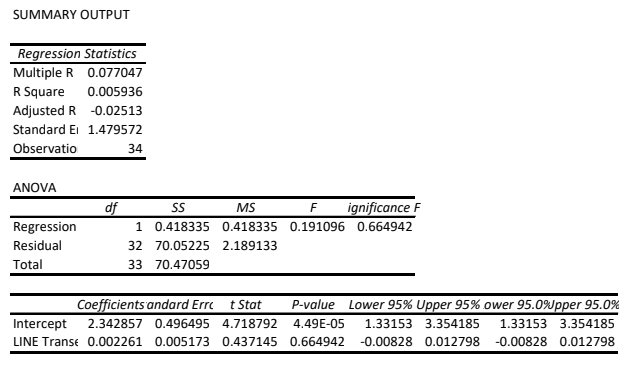
Based on our results, there is no correlation between the distance into the forest and the number of tree species found. This is illustrated in the R^2 value being so small and the trend line almost being a horizontal line. This could be due to the fact that we went to far into the forest to collect our data or that we didn’t go far enough. It is also possible that our sample was not large enough to see a trend.

Gene Flow Halted by Fragmented Forests:

In the article, Gene Flow Halted by Fragmented Forests, the author explains that preserving the ecosystems of river floodplains are important due to the fact these floodplains help fight against poor water quality and erosion but also maintain a highly diverse wildlife range.Scientists at the University of Tsukuba studied the species Acer miyabei. By evaluating the gene flow of this species, scientists are able to see that the younger samples have a greater species differentiation by genetic isolation, because of forest fragmentation. Forest fragmentation has an effect on the species reproduction by insect pollination. This is important to understand and study because it allows scientist to study the effects of forest fragmentation which is one of the factors of urbanization. In conclusion, scientists found that Acer miyabei are important factors in species diversity and there is a need to conserve their habitats.

Restoration:

By understand where species like Acer miyabei are lacking due to environmental changes, scientist and researcher can begin to understand how to aid in the restoration. For example, the article touched on how flies produce in the lead litter of the tree help to pollinate the trees. Scientists are then able to ask the question of what would happen with the increase of file reproduction.

Peer Review Article:

In the article, Tree species richness and the logging of natural forests: a meta-analysis. Jason Covey and Kristofer Covey thoroughly cross analysis studies evolving the impact of logging on tree density. From this analysis, the authors are able to determine common factors in the decline of tree diversity. They explain that in tropical forests, that logging is less of a disturbance than another human evolvement. However, the data shows that nine out of the seventeen tropical forests studies show a negative impact of logging. While in the eight temperate forests there were seven forests that had no significant difference between logging and a natural forest. The other temperate forest found there to be a positive impact from selective logging.

Sources:

Clark, Jason A, and Kristofer R Covey. “Tree Species Richness and the Logging of Natural Forests: A Meta-Analysis.” Forest Ecology and Management, Elsevier, 27 Apr. 2012, http://www.sciencedirect.com/science/article/pii/S0378112712001958.
Here Kitty!

Everyone knows the videos of cats being scared by cucumbers and the endless accounts of cats being “sassy” or “grumpy” with their owns. And who can forget picking up the first dead animal present your cat has left you lying in the middle of the floor? But not everyone is aware of the threat that these lovable but yet hateable creatures create for our surrounding ecosystems due to their home range.

Home Range:

Every animal has a home range. A home range is a physical area that an animal covers when conducting daily activities. Home ranges can vary due to factors of food and mating availability or predator location. Scientists have developed radiotelemetry has a way to monitor an animal’s movement by attaching a signal emitting transmitter on to the animal. The transmitter then signals to a receiver where scientists can gain access to the information being transmitted.

Cats’ Home Range:

Cats are known to be one of the biggest predators. This can be seen especially when evaluating the predation they contribute to the small bird population. Because cats are such natural predators, the more cats are allowed free range, the more small birds and animal populations will decrease. According to the resource dispersion hypothesis, the home range will increase when resources are limited. Therefore, once a cat or cats have exhausted resource in one area, their home range will continue to grow and have impacts on the surrounding ecosystem.

Result:

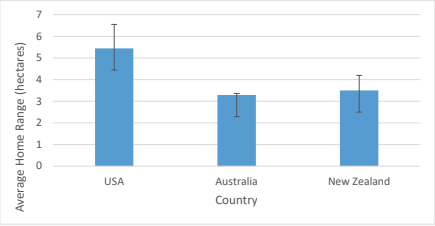
Through the evaluation of a sample of forty-five cats and the bar graph above, we were able to determine that the cats in the United State have a larger home range than Australia and New Zealand. During the data gathering from the site MoveBank, I made sure to compare urban cats to more rural cats and found that rural cats seemed to have general larger home ranges. However, there were the exceptions for both types of cat.

Discussion:

The main question to ask concerning the research is why are cat avoid certain places and returning to others. Some biotic factor that can be evaluated, as stated before, are mating and food availability and the avoidance of predators. Some abiotic factors would fall more along the line of geographical inhibitors. For example, streams and creeks that cats couldn’t cross. Busy streets would also be another one.

In the future:

Now that we are provided with the information to see a pattern, how can we fix this ecological problem that cats are creating for the communities? One way would be to create safe environment for the local wildlife species, specifically looking at birds. For instance, bird house can be set around park were cats cannot break into. This would protect bird species populations with out bring harm to the cats home range.

The Cats of Northwest Georgia:

A study conducted in the Northwest of Georgia study whether the change in the home range of domesticated cats varied based upon seasons and night time v.s. Day time, and the predation of the cats. The study focused on seven cats on a free-range farm. The study showed that there was no effect from seasonal variation, however males cats showed to have a larger home range both at night and during the day, than their female counterparts. Throughout the study, researchers would also scat the cats. There were a total of 210 scats during the study. Through these scats, researches were able to discover that of the 158 scats that contained hair, 86 scats contained hair from the felines’ prey. Final, the studied conclude by making the claim that “Large home ranges of free-ranging cats could negatively impact native wildlife.”

Relation to Our data:

While re-evaluating the data, I notice that it seems that sex also contributes to the increase of the home range. Although a female cat held the largest home range value, overall males did have a general higher home range average. This could possibly be contributed with males seeking a mate rather than the females.

Sources:

Kitts-Morgan, S., Caires, K. C., Bohannon, L. A., Parsons, E. I., & Hilburn, K. A. (2015). Free-ranging farm cats: Home range size and predation on a livestock unit in northwest georgia. PLoS One, 10(4) doi:http://dx.doi.org.proxy.lib.utc.edu/10.1371/journal.pone.0120513

Urban Ecology:

Why is Urban Ecology Important:

Urban Ecology involves high density developed areas. These areas contain concrete roads, higher temperature, and divided landscapes. As more of the world’s population moves towards these areas, the consequences on the surrounding environment are unseen.

How Can We Study It?

One way to start understanding Urban Ecology is looking at the individual aspects. For example, studying the effects of food quality and availability. The quality and availability of food then impact the ability of organisms to sustain life.

Renaissance park:

Personal Experiment:

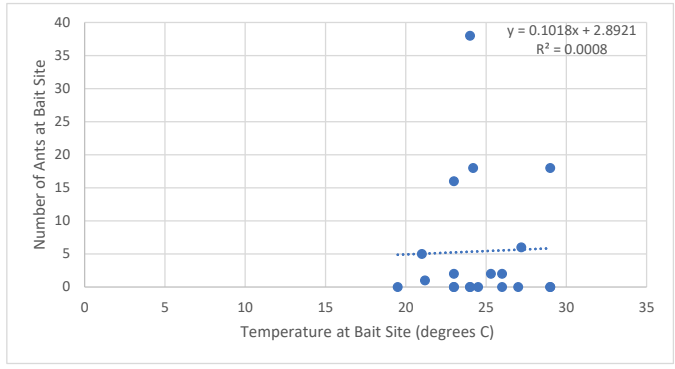
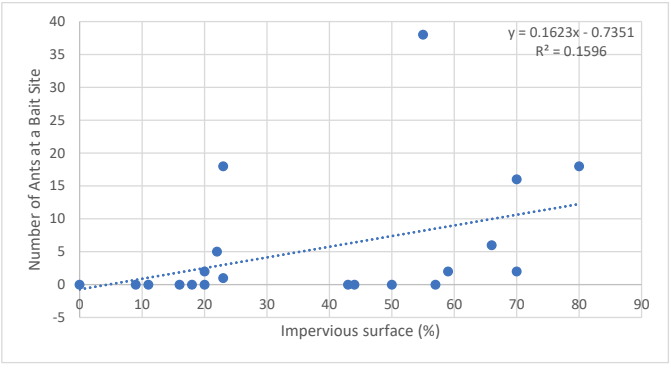
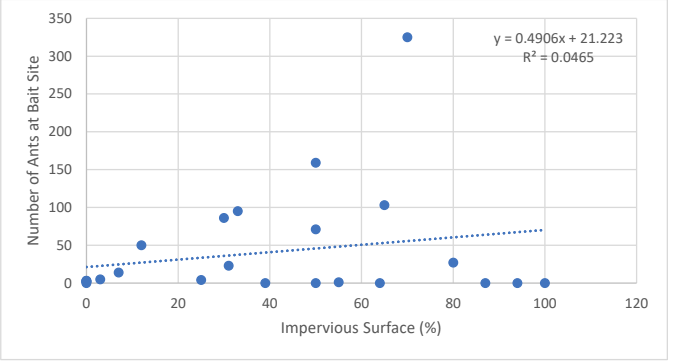
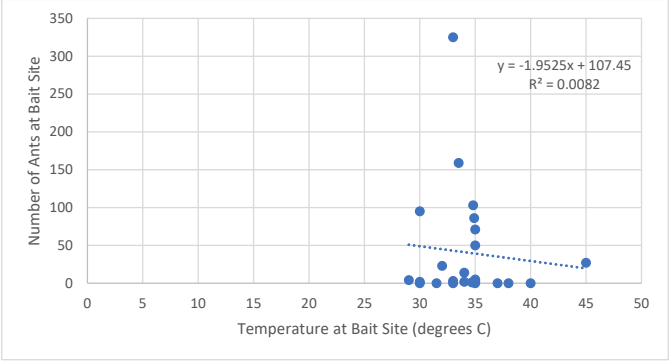
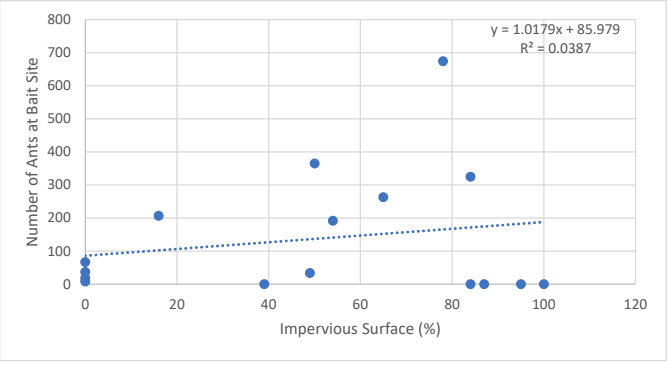
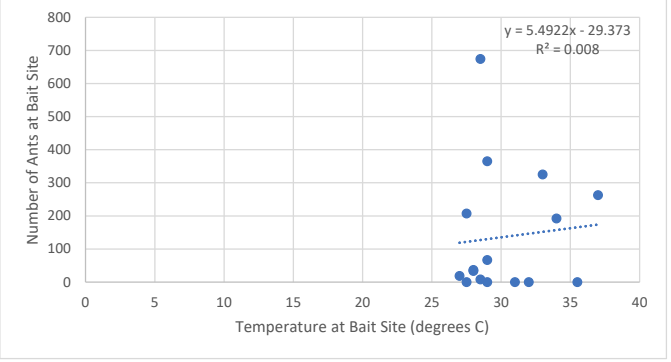
At Renaissance Park, we conducted a small scale field study based around the idea that impervious surfaces and temperature impacts ant activity. We did this by having four different baits set up at each of the four sites. Two bait sites were on impervious surfaces and the other two were set up on the grass. After the baits were set, we wanted for an hour to see if there had been any activity. Only one site had any activity. This site was on the edge of the sidewalk.

Results:

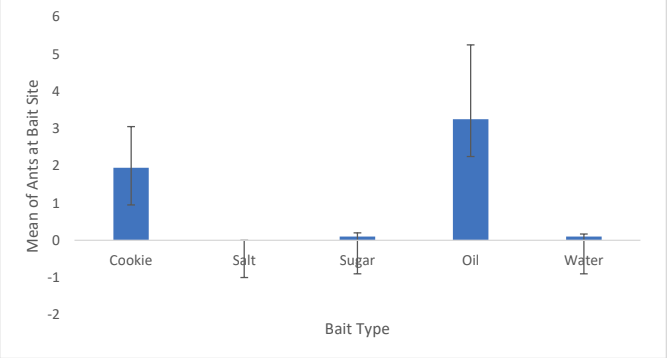
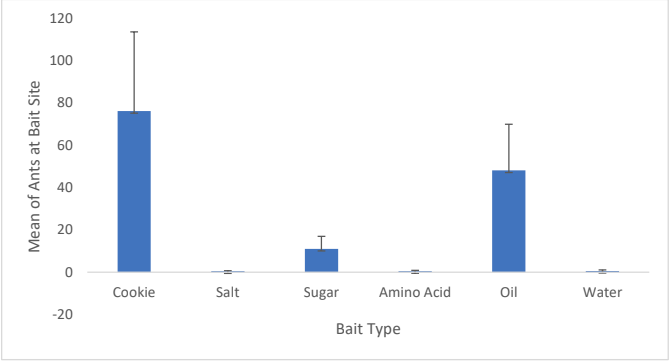
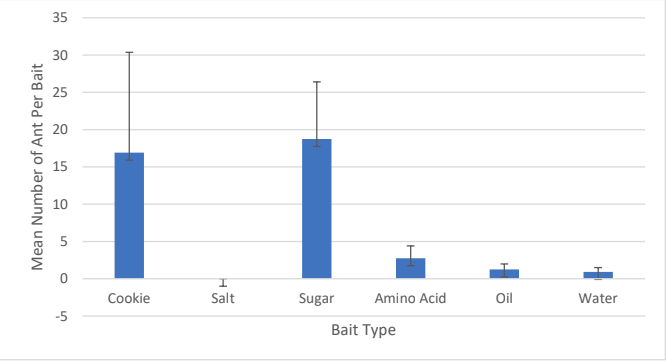
(2019 Bar Graph based on the how many ants were at each bait)

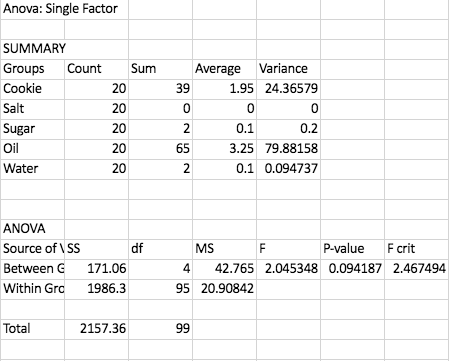
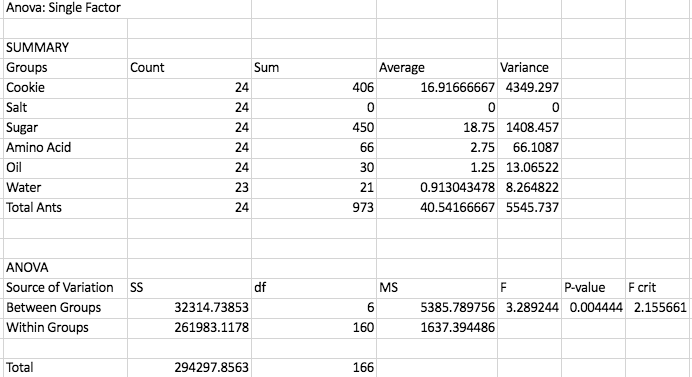
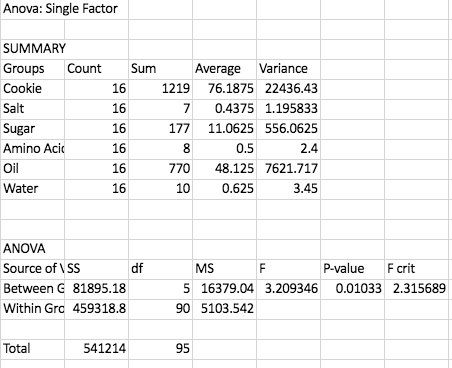
Overall, we were not able to get enough samples to fully compare data with past years. However, we did find that Oil was the most favored bait. It was also conclude that null hypothesis is not rejected due to the fact that the F-value is smaller than the F critical value.

2016 Data Set:

(2016 Bar Graph based on the how many ants were at each bait)

2017 Data:

(2017: Bar Graph based on the how many ants were at each bait)

Bugs in Manhattan:

In the article, Bugs in Manhattan Compete With Rats for Food Refused, the author informs the readers on how insects help decrease the mount of waste that humans have created. Researchers were able to find this due to a field study in Manhattan. They set open and caged baits to attract animals and insects. The open baits allowed researchers to see the insects and animals impact on the bait, while the caged bait allowed them to study just the insects impact. Researchers also gather ants. It was found that insects can remove up to fourteen pounds of garbage in eight months.

Peer Review:

In the article, Comparison of the Exotic and Native Ant Communities in Urban Green Areas at Inland Coastal and Insular Sites in Spain, researchers took samples from 27 sites around Spain. The ants were gathered using pitfall traps. It was found that there was a significant increase in species richness and abundance of exotic species and a decrease in native ant species. In conclusion, the authors explain that urbanization leads to the dominance of certain species and decrease the species richness of a community.

Sources:

Reyes-López, J., & Carpintero, S. (2014). Comparison of the exotic and native ant communities (hymenoptera: Formicidae) in urban green areas at inland, coastal and insular sites in spain. European Journal of Entomology, 111(3), 421-428. Retrieved from https://proxy.lib.utc.edu/login?url=https://search-proquest-com.proxy.lib.utc.edu/docview/1551149443?accountid=14767

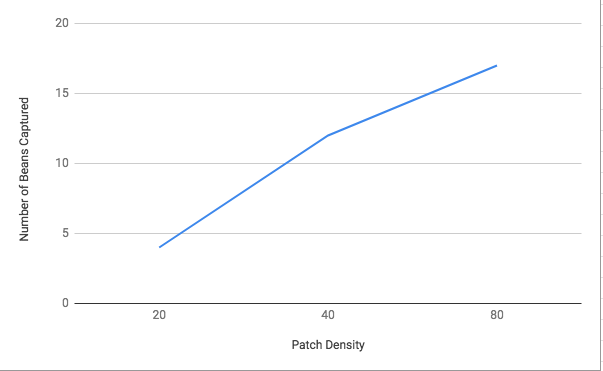
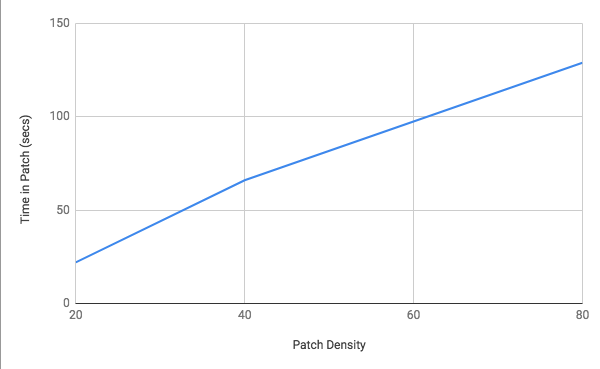
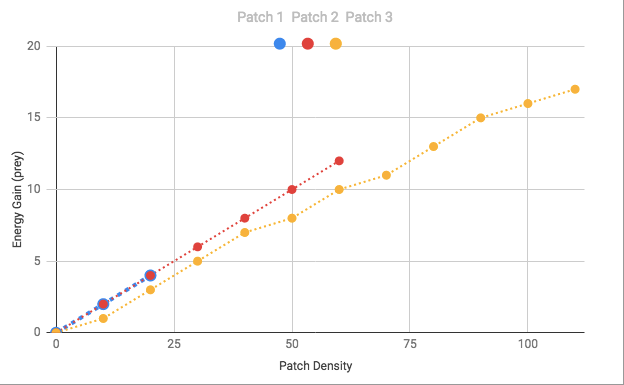
Optimal Foraging Graphs:

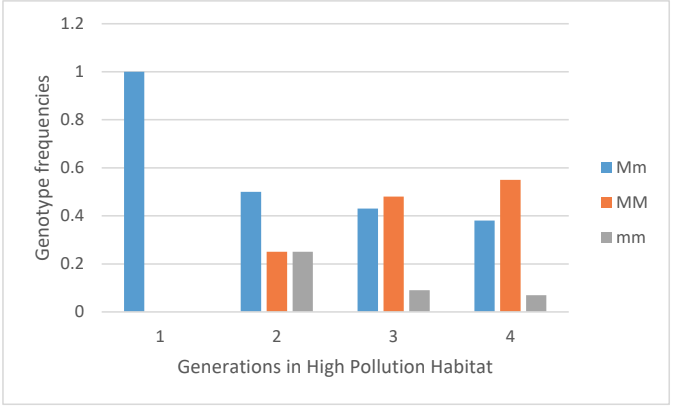
Hardy-Weinberg

Our Results:

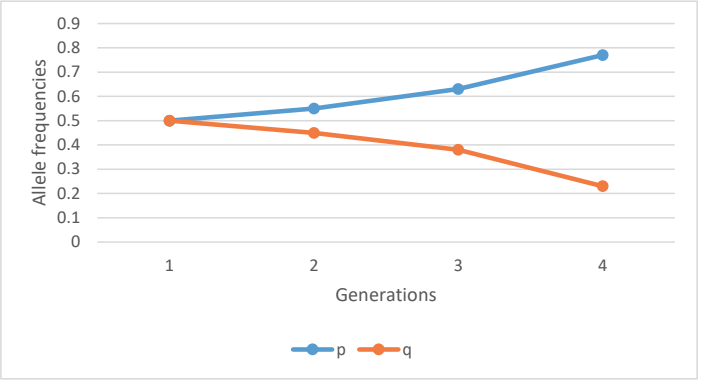
High Pollution:

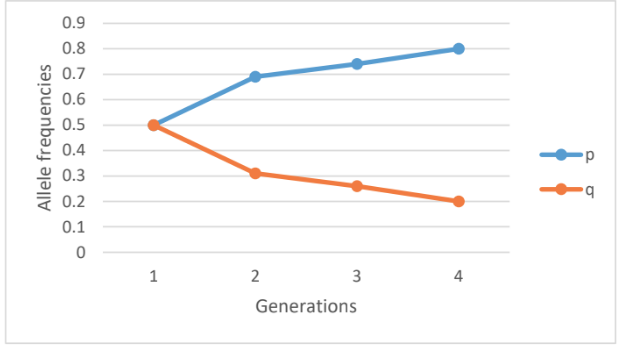
When there was “high pollution” (more black on the paper) the darker moths were able to survive while the number of white moths declined the more generations that were introduced.

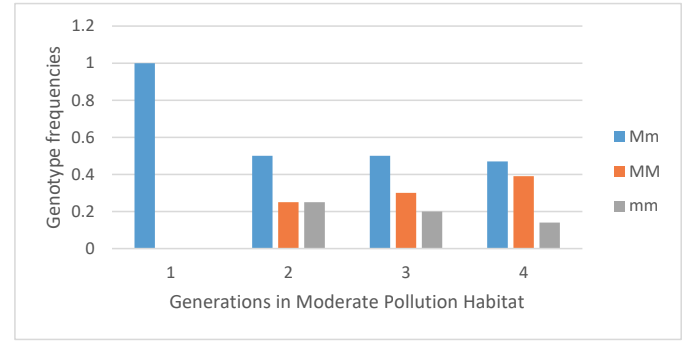
Moderate Pollution:

As far as the moderate pollution line graph, the dominate allele is increasing while the recessive allele is decreasing. This is similar to the higher pollution model, however it is at a more gradual rate.

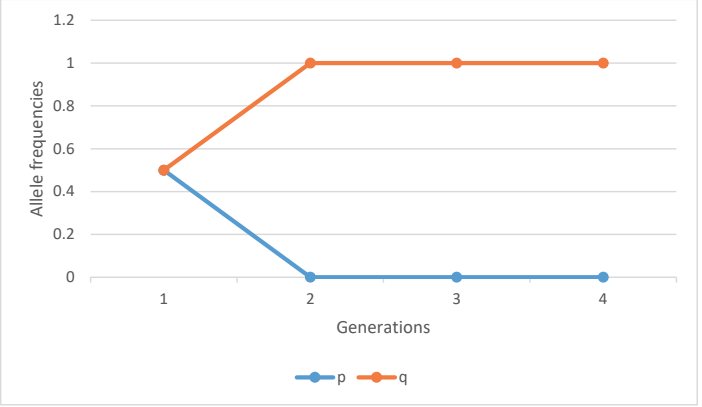
Low Pollution:

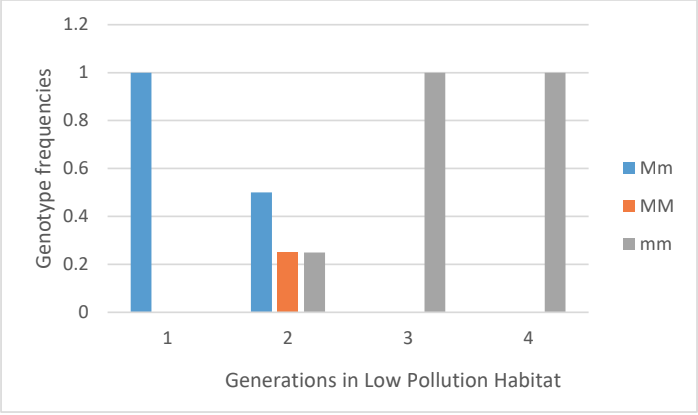
As far as a low pollution environment, the dominate allele that create the darker moth has gone extinct.

Conclusion:

In conclusion, the environment plays a huge role the survivability for the species. High pollution and moderate pollution allows the darker colored moths, with the phenotypes “MM” and “Mm” to blend into their surround. In these environments, the lighter colored moths with the phenotype “mm” have a harder time trying to avoid predators. However, in the low pollution environments, the lighter moths have the upper hand. They have a higher survival rate, while the darker moths result in extinction.

Peer Review

In the article, Selection and Gene Flow on a Diminishing Cline of Melanic Peppered Moths, the authors evaluate the most recent study on carbonaria Biston betularia. They found that the black species declined after legislation to improve air quality. However, in 2002, researchers found that this decline still exists, but is much smaller. The morph is not favored as far as landscape factors, however, there are high dispersal aids against genetic isolation. This new research has lead scientists to believe that it allows for new conclusions to be drawn involving gene frequency change in this species. It also has reinstated how multiple generations are required for this change to occur.

Review: A Man’s New Best Friend?

In the article, Man’s New Best Friend? A forgotten Russian experiment in fox domestication, Jason Goldman, the author, explores the history of the genetics in Communist Russia. Goldman uses the history of Lysenkoism to illustrate the importance of study genetics. Lysenkoism states that acquired characteristics cannot be genetically given to the offspring. However, after Russia’s change in political stance, Dmitri Belyaev is able to test the hypothesis that changes observed in domesticated animals is influenced by the selection of behavioral traits. Belyaev conducts an experiment by domesticating one-month-old silver foxes. The foxes where there bred after determining how tame they were through a test that evaluated their response to touch. The offspring were then evaluated by their responses to human interaction. The offspring acted kinder towards the researchers compared to wild silver foxes. Through generations of breeding, physical changes were also seen.

Sources:

Saccheri, I. J., Rousset, F., Watts, P. C., Brakefield, P. M., & Cook, L. M. (2008, October 21). Selection and gene flow on a diminishing cline of melanic peppered moths. Retrieved April 20, 2019, from https://www.ncbi.nlm.nih.gov/pmc/articles/PMC2571026/

Dispersion of Plants:

Dispersion:

Through this field study, we studied the dispersion of the plant species. Dispersion is the process of how an individual spread out in a population in a given area. The dispersion can be classified into three different categories, clumping, uniform, and random. Clumping dispersion is when the position of the organism depends on the distribution of resources, safety precautions, and/or mating locations. Uniform dispersion is the spacing of an organism across the area, this can be the result of interactions between other organisms. Competition would be an example of this interaction. Random dispersion is when the spatial position of an organism occurs without the influence of other individuals.

Paspalum dilatatum:

The amazing the about Paspalum dilatatum is its ability to adapt to its surroundings. For example, in the abstract of “Effects of Flooding and Drought on the Anatomy of Paspalum dilatatum”, the authors illustrate key constitutive and plastic anatomical traits that allow the plant species to survive in droughts or floods.

Constitutive anatomical traits:

There are high amounts of aerenchyma and sclerenchyma and a conspicuous endodermis. All the factors allow for the protection of the roots and leaf sheath. Aerenchyma will maintain aeration, sclerenchyma, and the endodermis will protect the stellar tissue.

Plastic anatomical traits:

Depending on the flooding or drought conditions, the plant is able to adapt. The flooding precautions that the plant take is decreasing the structures that allow water uptake. This includes gaining more aerenchymatous tissue in the roots and leaves. The plant also decreases the number of root hairs. During a drought, the plant decreases the size of the root metaxylem vessels and increases the number of root hairs. These precautions allow for the plant to conserve water, but also allow the most access to potential water uptake.

Our Interpretation:

When considering these factors in relation to our field study, it would explain how the plants are able to survive in multiple conditions. This means that even if the plants were in a location that didn’t get as much water as others, they would still be able to survive in these conditions, but the roots would be smaller. This could result in smaller clusters that are formed.

Our Field Research:

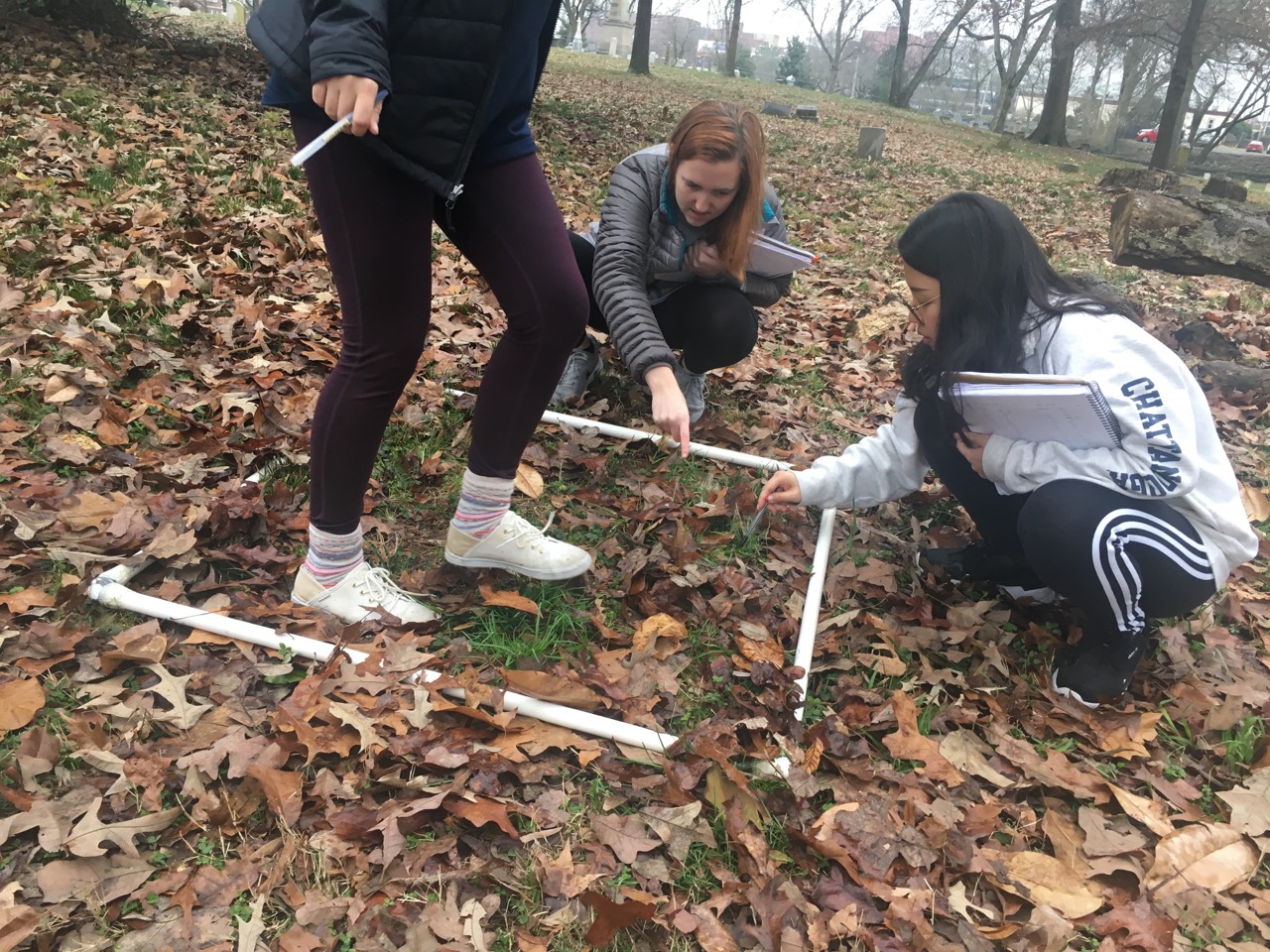
In our field study, we used one meter by one-meter square to set quadrat. We were supposed to set randomly select section of the Confederate Cemetry to observe and count the number of Paspalum dilatatums we saw. We took 10 different sample quadrat and found that our average density was 5.8 Paspalum dilatatums square meter. We notice that our largest number of the plants was in the wettest area of the cemetery, this leads us to believe that the plants could be dispersed by clumping dispersion.

Prediction:

Based on the readings and our data, I believe that when we evaluate the class data as a whole that we will find that Paspalum dilatatum’s dispersions are the clumping dispersion. Although the abstract of  “Effects of Flooding and Drought on the Anatomy of Paspalum dilatatum” illustrates how these plants can survive in dryer conditions, we found the higher populations of the species in the areas that receive more water. This correlates with the definition of clumping dispersion. There would be more organisms there due to the fact that there is more access to the resources and the roots would be extending more.

Our Results:

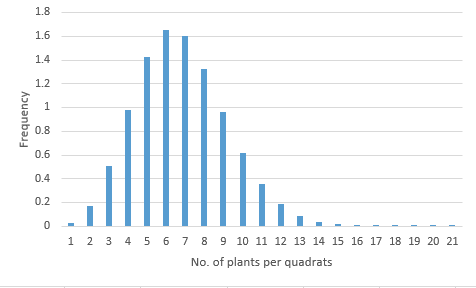
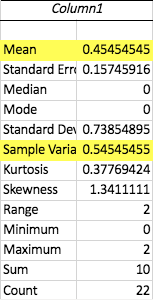
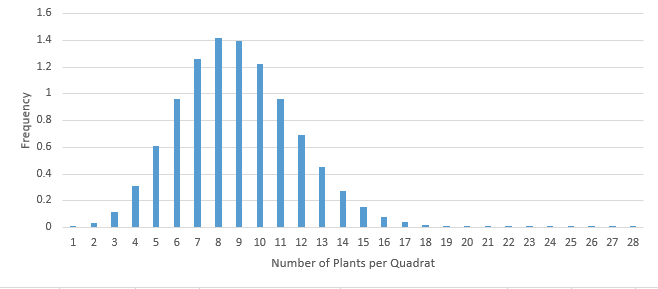
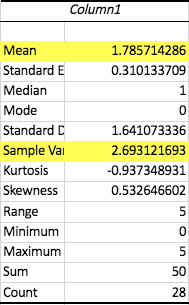
Our group name for evaluation purposes was Mushroom. After running the chi-square and creating a graph for our data (as seen below), we are able to conclude that Paspalum dilatatum does exhibit signs of clumping due to the fact that the mean is smaller than the variance when the chi-square test was run.

This also can be in the class data. By finding the class chi-square values, this furthers the support of the species distribution being defined as clumping.

Spreading of Seeds:

The dispersion of the seeds also plays a role with distribution. P. dilatatum is spread multiple ways. These seeds can be spread by weather, animals, and human interference. The distance that seeds spread can be large depending on the animal caring them. For example, in the article by Erik Stokstad, he talks about how elephants can carry seeds for great distances. The same thing is for the P. dilatatum, but on a smaller scale.

Plants have an unexpected response to climate change:

This is an important article to read to understand the full effects of climate change on Earth’s population of plant species. Jennifer Balmer explains the science behind how climate change is creating a migration plant species. She exclaims as the temperature is rising plants are torn between moving downward for water accessibility and upward for cooler temperatures. Balmer states that “More than 60% of plants shifted their distributions downward, towards warmer, lower elevations.

Droughts and Paspalum dilatatum:

I believe that if P. dilatatum was put into increased drought conditions, the species would start to move upward to lower temperatures rather than downwards to more water availability. I make this claim solely on the fact that P. dilatatum has precautions to protect itself against drought-like conditions, but I am not sure about its ability to manage in higher temperatures.  

Peer Review: Gibbula nivosa

Plants are not the only organism that can exhibit dispersion. A study conducted on the species Gibbula nivosa resulted in the indication of uniform dispersion. The researchers in the study where able to conclude from this analysis that the species was not social. G. nivosa is a top-shell sea snail located in the Maltese Islands. The density of the snails was “17.6 ± 25.0 SD individuals m−2” These snails were initially thought to have slightly clumped dispersion based off of a single quadlet grouping. However, when the species was evaluated as a whole, a uniform dispersion was apparent. The slight clumping dispersion was then dismissed as “patchiness in the environment.”

Relevance:

The research done on Gibbula nivosa is similar to the research methods that we did with Paspalum dilatatum, but on a larger scale. It is unique that the species was not found to be clumped distribution due to the fact that it is the most common type.

Source:

Evans, J. Borg, J.A. & Schembri, P.J. Mar Biol (2011) 158: 603. https:// doi-org.proxy.lib.utc.edu/10.1007/s00227-010-1584-4

Bird is the Word!

Personal Experience:

My roommate and I were walking back to our apartment after a night out this winter when on the way back we saw a rather medium size bird sitting outside our neighbor’s apartment door. We were not quite sure what to do, but both being animal lovers we felt obligated to do something. My roommate put a piece of bread next to the bird in hopes that it would at least the bird just need some food. Looking back at this experience, it seems very foolish. However, I was aware that the bird will shut down their body processes in an attempt to conserve energy when it is cold. This is just one way that animals can contribute to thermoregulation.

Thermoregulation:

Thermoregulation is important to all living things due to the fact that it allows an organism to use different processes to control their own body temperature based on the external temperature. The are two types of organisms that use thermoregulation. They are known as endotherms and ectotherms. Endotherms produce their own body heat through internal metabolic heat. Endotherms must maintain their heat through insulation which in result allows them to generally be bigger animals. However, this also means that endotherms will have a harder time cooling themselves off in warm weather. Ectotherms rely on external sources of energy to regulate body temperature. Ectotherms utilize processes like basking. Basking is when animals lay in direct sunlight to absorb heat.

The Lab:

General Lab:

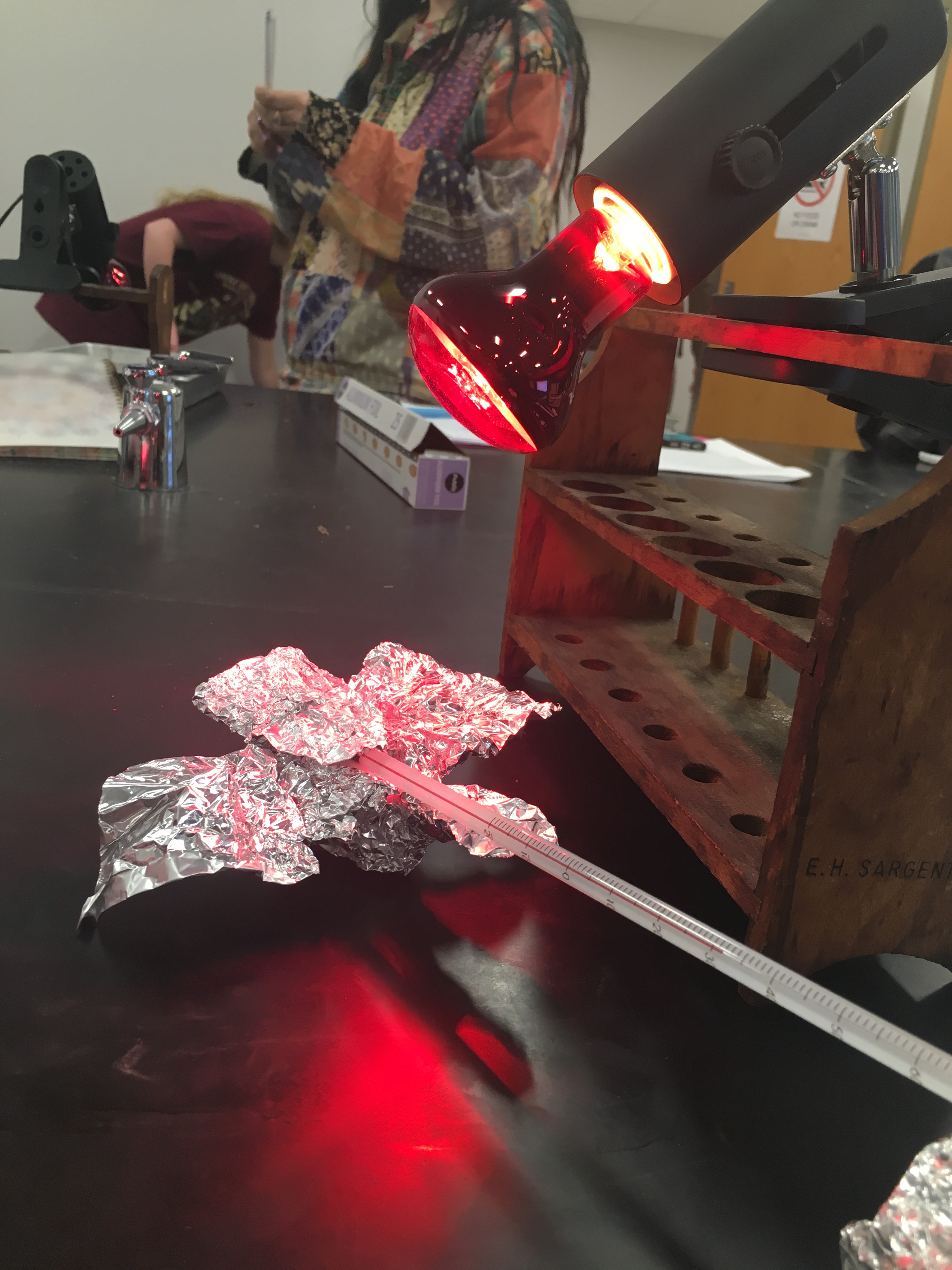
The purpose of this lab was to recognize different factors that play a role in thermoregulation. Some examples of these factors were size, color, and amount of direct sunlight. My partner and I decide to use this opportunity to test how the amount of surface area contributed to the time it took for our animal to heat and cool down. We began our experiment by familiarizing ourselves with our equipment by running the experiment on practice cubes. The object is put in front of the heat lamp with a thermometer inside the cube to monitor the temperature. This temperature was checked every minute and the temperature was then recorded. The light was kept turned on until the temperature leveled off its highest point. After this, the light was then cut off to trigger the cooling process.

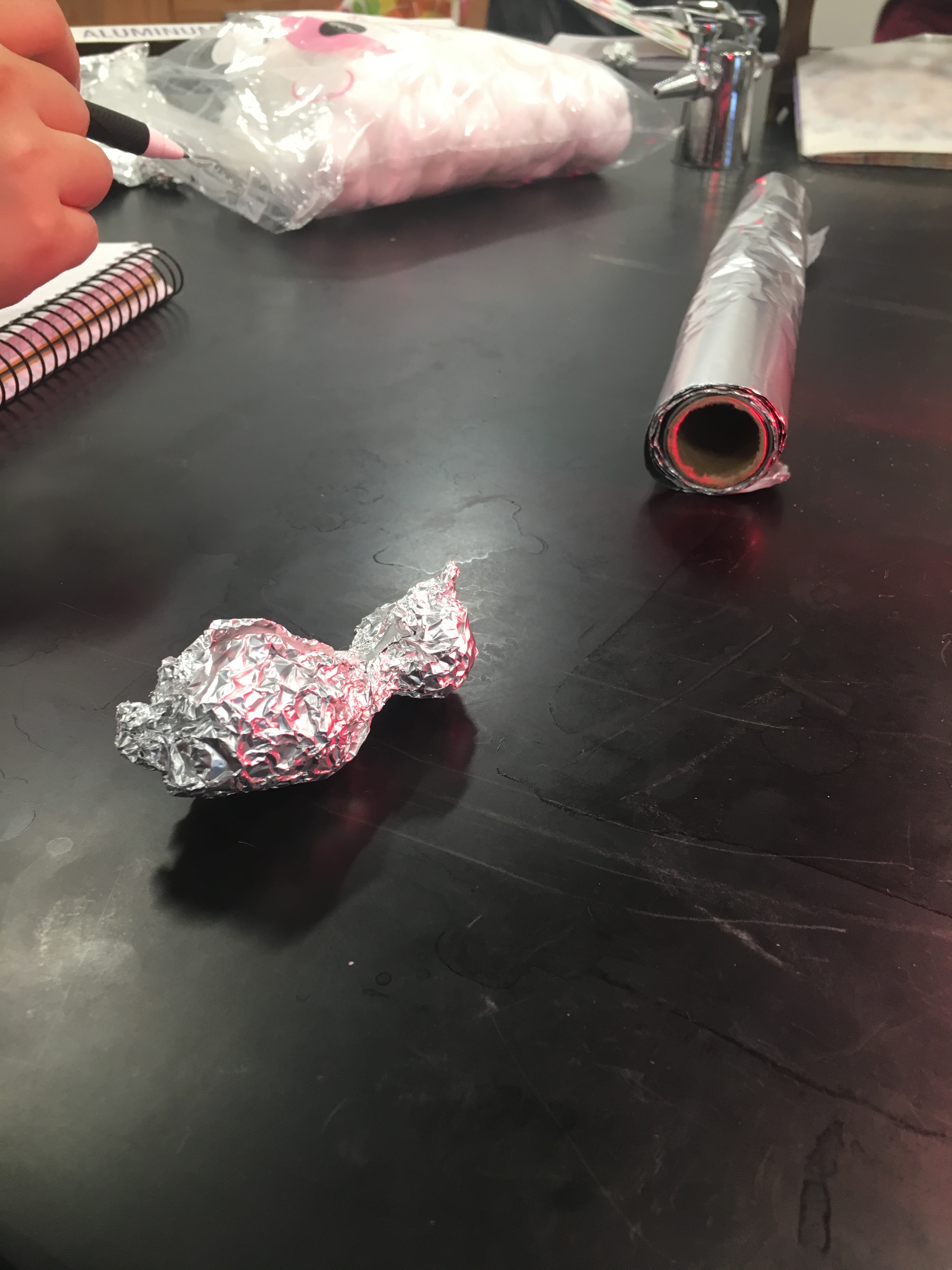
Using the same method in the introduction experiment, my partner and I chose to focus on body size with an emphasis on the body surface in birds. Our birds were each stuffed with four cotton balls, while both of the outsides of the birds were made with tin foil. Because most birds are endotherms, it was important to stuff the birds to accurately depict their insulation.  My hypothesis was If we increase the amount of surface area during the study, then the subject’s temperature will be able to the fluctuate faster. I figured that if there was more surface area both times would be shortened by the larger ratio of the body surface in direct contact with the environment to the depth of the bird.  

Individual Lab:

Results:

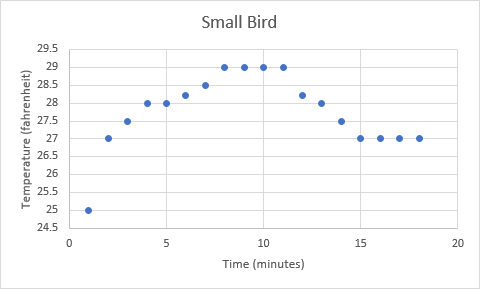
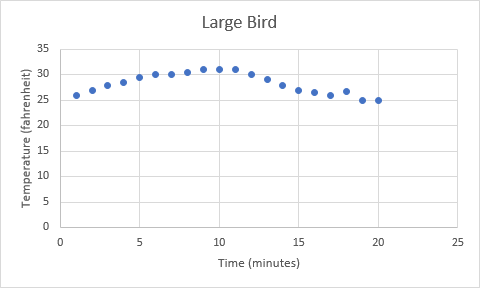
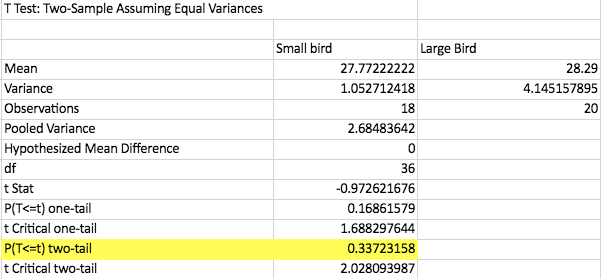
Based on the results, the hypothesis is rejected. Not only did the bigger bird take longer to heat, but also to cool down. The surface area did not figure out how I had originally believed it would. Because the smaller bird was able to heat up and cool down faster than the bird with more surface, in this situation the smaller bird would be able to adapt to the warmer climate change.  Our p-value was 0.337, which is over the chosen alpha level at 0.05. This means that our data does not have statistical significance. The null hypothesis is supported, meaning that the surface area of “bird” has no effect on the cooling and heating periods of our experimental animal.

(T-test results from comparing the Small and Large Birds)

Errors:

There are a couple of factors that can affect the results of our experiment. For example, to completely compare these two birds, we should have checked to our controlled factors more carefully. The weight and the size of both bird should have been measured. The distance between the heat lamp and each bird should have been checked before every trial run. There also should have been more than two trial runs conducted to obtain an accurate t-test.

Science Daily:

Two studies were conducted in May and June of 2018. In the article “Monkeys Eat Fats and Carbs to Keep Warm”, Professor David Raubenheimer and Charles Perkins Centre conducted a study on the nutritional intake of Monkey in China’s Quinling mountains during the winter and compared them between the nutritional intake of that in spring. They found that the carb and fat intake double in winter compared to the spring months. They concluded that these animals knew and only consumed the nutrients that their bodies need for certain seasons. In conclusion, it mentions that Professor Raubenheimer is conducting multiple studies like this one to try and understand the motive behind obesity in the human species.

In contrast, the other studied is mentioned in the article “Huddling for Survival: Monkey’s with more Social Partners can Winter Better”. In this article, Dr. Bonaventura Majolo and Liz Campbell studied the social thermoregulation of wild Barbary macaques monkeys in Morocco. Social thermoregulation pertains to how the bonds that these monkeys have formed in their community and how that helps them to regulate their temperature. An example of this would be huddling, which these monkey as seen doing. In their results, it was found that the monkeys were more likely to spend more time grooming each other, in a huddling way when the temperature was lower and or there was higher precipitation.

Comparison:

These two articles depict different ways that animals use thermoregulation. One evaluates the social aspect while the other assesses the food intake. Both aspects are important to calculate due to the fact that climates are becoming more extreme over time. Thermoregulation is important to study in every aspect because it will be a key factor to look at the adaptation of species as this drastic change occurs in the environment.  

Body Temperature:

In the article, “Body Temperature Regulation in Hot Environments”, A. P. Leventis Ornithological Research Institute in Nigeria conducted a study evaluating the effects of body mass on body temperature in small birds in hot environments. The researchers also focus on which birds went into hyperthermia. Hyperthermia is the process of the body shutting down to conserve energy and water in the body. This idea was mentioned early in the “Personal experience” section of today’s blog post. They concluded that only two of the species being studied went into the state of hyperthermia in this environment. (Nilsson et al.,2016)

This although in this study the researchers continued their study to direct sunlight, shade, and hyperthermic processes, they also look at the mass of the birds. This relates back to our study of focusing on the size of the bird in direct sunlight. During our study, we found that the smaller the surface area, the easier for the bird to cool and heat.

In Conclusion:

The study of thermoregulation is important due to the fact that the climate around the world is becoming more extreme. It affects human’s as well as animals. It is dire that humans look to thermoregulation studies to seeing changes in the environment and the adaptations that are following.

Sources:

Nilsson, J., Molokwu, M. N., & Olsson, O. (2016). Body temperature regulation in hot environments. PLoS One, 11(8) doi:http://dx.doi.org.proxy.lib.utc.edu/10.1371/journal.pone.0161481

Science Communication

(College student trying to understand her sources

Why is science communicant important? What relevance does it have to? It actually has a lot. I remember when I first started out doing small research around middle school. Teachers would ask us to find an outside source and write a couple of paragraphs on how it relates to what we are studying. I know that one point or another we have all stumbled across an article that makes us want to shut down or give up. There are statistics we do not understand, and references that we do not get. This is where science communication steps in. The idea is that scientists help reword and create an understandable and accessible article or another type of media for the average person to understand.

Introduction:

Science communication is the process of taking scientific research or concepts and forming them into an article, television show, or some other media platform, to inform the general public of these advances in science.
Science communication seems as though it is an easy task. Something that scientists should be able to do without worry. They have written research papers and even books, so why is there so much emphasis on science communication? This form of communication runs into multiple problems like language barriers (Alda, 2016), mistaken dissemination (Smith & Reute, 2017), and lack of stated relevance (Feliú-Móger ,2015).

Language Barriers

As for language barriers, in the interview with Alan Alda, a writer, actor, and science enthusiast, he explains that when scientist are trying to inform the public of new innovations or research conclusion, that they use too much “jargon”. When the public is represented by these words and concepts that took years to understand, they are not sure what to do with it. Alda then goes on to talk about how a scientist needs to create a comfortable and personal learning space for their audience. He explains how the scientist’s job in science communication is to “expect the ignorance and curiosity”, but also “if there is ignorance, get us curious” (Alda, 2016). Scientists must take responsibility for the conclusion that the audience forms at the end of the day.

Mistaken Dissemination

Language barriers are also formed when scientists form dissemination instead of science communication. Dissemination includes papers for peer-review. This is what Smith calls a scientists “day job” (Smith & Reute, 2017). Some scientists are researching and developing concepts for the main purpose of getting published. However, Smith states that researchers owe it the public to communicate what there are doing since some are using taxpayer money (Smith & Reute, 2017). Reute argues that good science communication should be addressed to multiple audiences with the relevance to society included (Smith & Reute, 2017).

Lack of Relevance

The relevance that Smith and Reute talk about is also brought up by Monica Feliu-Mojer in “Effective Communication, Better Science.” Feliu-Mojer examine public communication as understanding the “big picture”, and that one must have a deeper understanding of the research, and concepts that apply, to be able to relay that to the general public (Feliu-Mojer, 2015). She explains that to have this deeper understanding means that scientist will relate the information to a broad span of concepts, and “ increase the impact of science in multiple dimensions (Feliu-Mojer, 2015). By doing this, the audience is able to see the relevance of the research.

Applied to Life

Through the examination of each article, the problem that science communication faces and the corresponding resolution have been represented. It is important to remember when attempting science communication to create a comfortable and personal environment, to think about the audience and how they deserve to have access to knowledge and to fully understand the topic at hand and make a deeper connection to society. All of these steps related to one another, but each has their own part to make science communicate indulgent for the audience.

To dive more into this idea of writing for the audience, there was a study conducted by Wilkins and the others, that focused their research on different groups of people and how they obtained their information based solely around environmental science communication. Their conclusion is based on a sample size of one thousand and thirty out of the possible five thousand and was obtained through a mail-in survey. The conclusion stated that people were more favorable of in-personal experiences and hands-on activities. This was then followed by visual media be the second most favorable. The least favored formal educational opportunities. This would include lectures and classes (Wilken, et al., 2018).

This study relates back to science communication by supporting the idea that the audience needs to be engaged and able to relate the information to their own lives. With hands-on activities, the individual is able to physically apply the concepts he or she is interested in. They are able to create that sense of relevance themselves instead of being told that it is there one. This can create a more memorable experience. As for as visual media, the audience can at least physically see a connection to the world, rather than just read it on paper or online.

It’s Okay to Be Smart Review

The blog “It’s Okay to Be Smart” created by Joe Hanson is a very interactive blog with captivating videos along paired small excerpts. These little excerpts would relate the topic at hand to Hanson life that was relatable for the audience. It was easy to notice the spacing out of ideas that were done to not overload the reader. As far as color, the color was provided by the videos themselves. There were no colorful backgrounds.

LEGOS and a Donald Trump Caterpillar

In the blog post “How LEGO Helps Blind People See” begins with him talking about how Legos played a role in his childhood. The post is linked to a video that then goes on to describe how instructions are formulated in text for people who are blind. The video also explains how the other sense of the blind is heightened as an attempted by the body to make up for the lack of sight. I thought that this post was interesting, but I personally would like to have more words than a video. With videos, I understand the concept better as a whole, but with words, I understand details. I know that when I create my blog, I will struggle with being too word, which is why I do want to start incorporating a video here and there.   

I also looked at the blog post “Meet the Donald Trump Caterpillar!”. In this post, Hanson created his own video. He started the video by examining the Megalopygid Caterpillar, or the Donald Trump Caterpillar, and moved into talk about Batesian Mimicry by explaining that a species of bird’s young that mimics the caterpillar. I appreciate how Hanson starts off with a captivating narrow topic but then relates it to a much broader concept.

Moving Ahead with this Blog

Using all that I have learned from these videos and articles, I know that I need to make my blog more entertaining. I may have the full understanding of science communication, but I need to find ways to make the reader as interested as I am. I want to create my own videos for the topics moving ahead. I also need to pay attention to relating the topic at hand back to the bigger picture.

Work Cited:

Wilkins, E.J., Miller, H.M., Tilak, E., & Schuster, R.M. (2018). Communicating information on nature-related topics: Preferred information channels and trust in sources. PLOS ONE, 13(12).  10.1371/journal.pone.0209013